Las Vistas and Las Teresitas are my starting choices for the best beaches in Tenerife if swimming is the priority. Choose El Médano for wind sports, Playa del Duque for a comfortable resort afternoon, and the Anaga coast for scenery. Benijo belongs on the landscape shortlist, but its closed beach access rules it out as a swimming destination.
This Tenerife beach guide compares fifteen places by sand, shelter, family practicality and parking. These editorial recommendations never override today’s flag, lifeguard advice or closure notice. Access and advertised activity prices were checked on 30 September 2026.
Tenerife’s beach geography: golden sand, volcanic coast and seasonal waves
The north-versus-south distinction helps, but it isn’t a rule about colour. Tenerife’s volcanic coast produces dark sand, pebbles and rocky platforms. Some resort beaches have added pale sand, and Las Teresitas famously received sand from the Sahara. Natural beaches around El Médano have their own darker, brownish tones: neither every southern beach is white nor every northern beach is black.
For golden sand beaches in Tenerife, start with Las Vistas, Las Teresitas and the original Playa del Duque. For black sand beaches in Tenerife, consider Bollullo, La Arena and the Puerto de la Cruz waterfront. Dark sand becomes uncomfortable under bare feet in strong sunshine. Keep sandals beside your towel, especially with children.
Shelter matters more than sand. Breakwaters at Las Teresitas and Las Vistas reduce incoming swell; they don’t turn the Atlantic into a swimming pool. Open northern shores take more direct wave energy, while the south-east around El Médano is exposed to the trade winds, or alisios. A sunny day can still be a poor swimming day.
Check the current coastal forecast rather than assuming warm air means warm sea. Wind changes how cold you feel after getting out. Pack an extra layer for children and discuss a wetsuit with your instructor for longer sessions. Tenerife Tourism’s weather page includes coastal sea conditions and water temperature.
Compare 15 top Tenerife beaches
These are practical choices, not a safety ranking. “Family option” means easier facilities and access when swimming is permitted; it never means children can enter unsupervised. Parking descriptions are planning guidance, not a guarantee of spaces or free parking.
| Beach | Sand or shore | Family practicality | Waves and shelter | Parking and access |
|---|---|---|---|---|
| Las Vistas | Pale golden sand | Strong facilities and accessible routes | Breakwaters reduce swell | Town parking; walk along promenade |
| Fañabé | Grey-golden sand | Convenient resort choice | Conditions vary across bay | Resort streets and car parks |
| Las Teresitas | Imported golden sand | Sheltered family option | Breakwater reduces waves | Large parking area; busy weekends |
| El Camisón | Pale sand | Compact bay with nearby cafés | Sheltered by breakwaters | Town parking; promenade approach |
| La Pinta | Pale sand | Small beach beside marina | Protected bay; observe boat zones | Puerto Colón parking; short walk |
| Playa del Duque | Pale sand | Facilities close by | Swell still reaches shore | Nearby parking; check charges |
| Abama | Golden sand | Cove suits settled conditions | Some shelter; flag decides | Parking uphill; steps and descent |
| Benijo | Black sand | Beach access closed | Exposed Atlantic coast | Limited roadside space; views only |
| Bollullo | Black sand | Steps complicate family visits | Strong swell and currents possible | Small parking areas; stepped path |
| La Arena | Black sand | Convenient town services | Shore break can be forceful | Town parking; beach beside road |
| Playa Jardín | Black sand | Promenade and gardens | Surf plus changing bathing notices | Puerto de la Cruz town parking |
| Los Guíos | Black sand | Small serviced beach | Variable swell beneath cliffs | Marina/town parking; limited space |
| Playa San Juan | Dark sand and pebbles | Town beach with promenade | Harbour provides some shelter | Town streets; walk to waterfront |
| El Médano | Natural brown-grey sand | Town end is easier | Windy; separate swimming and sports | Town parking; busy on weekends |
| La Tejita | Natural darker sand | Few conveniences on sand | Open and often windy | Roadside parking areas; walk in |
Calmer swimming beaches for families
Playa de Las Vistas: my first south-coast shortlist
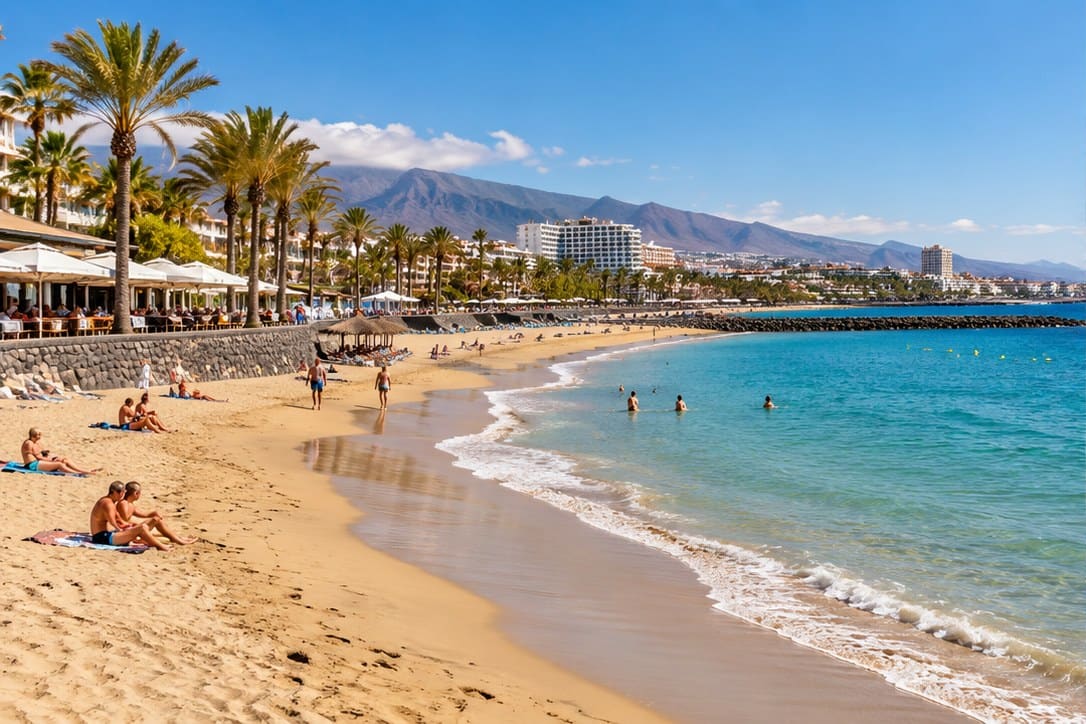
Las Vistas sits between Los Cristianos and the southern end of Playa de las Américas. Breakwaters help tame the swell, and its broad beach, promenade and accessible facilities make family logistics easier. Tenerife Tourism lists adapted access, showers, toilets and nearby parking.
I’d choose it when the day needs to work for several generations: beach time, lunch and an easy walk can happen in one place. The compromise is a busy resort setting. Arrive with enough time to find parking, or walk from your accommodation. For assisted bathing, confirm the service and operating hours locally; an accessible promenade doesn’t imply assistance is available all day.
Playa Fañabé: easy from a Costa Adeje hotel
Fañabé works if convenience beats solitude. Shops and restaurants line the seafront, and Adeje identifies it as a beach with a lifeguard station. Check whether the station is staffed when you arrive.
I would keep a Costa Adeje family beach day here rather than drive across the island solely for pale sand. The catches are crowds, commercial activity and variable water conditions. Pick your spot after inspecting the flag and swimming zone. If someone wants a jet ski, arrange it separately through the marina; busy bathing water is no place for an improvised launch.
Playa de Las Teresitas: shelter near Santa Cruz
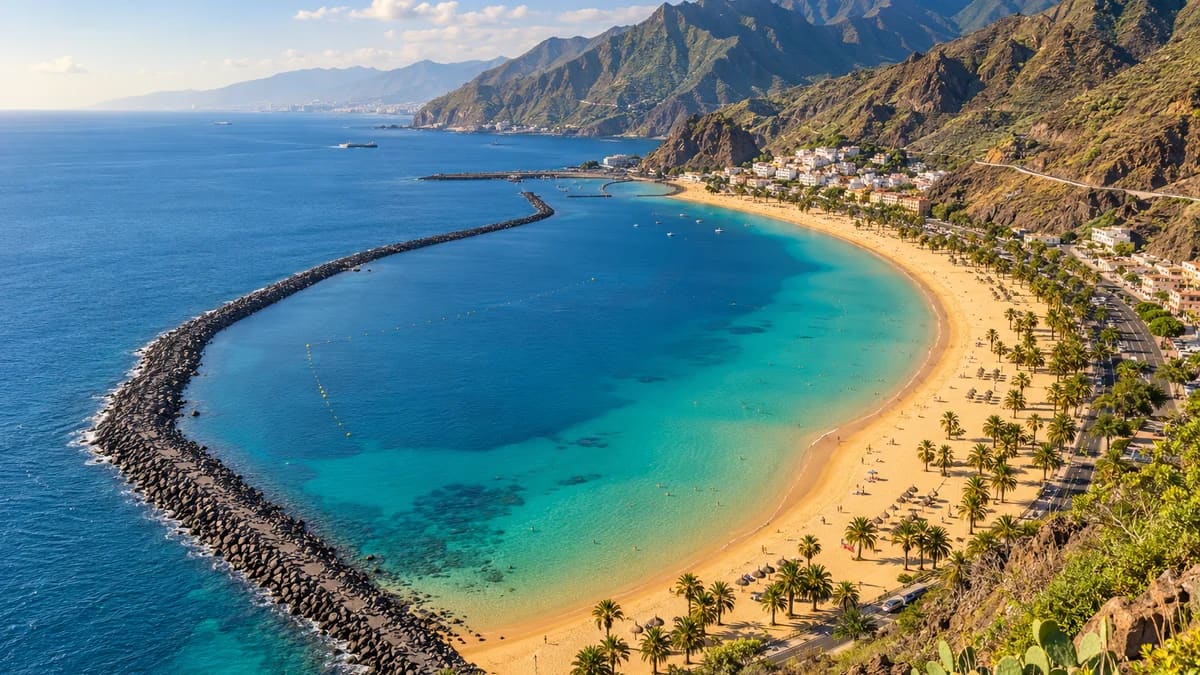
Las Teresitas combines golden sand, palms and a protective breakwater near San Andrés. Its appeal is practical as well as visual: the tourism board lists showers, toilets, accessible access and beach services. The bay offers a useful contrast to Anaga’s exposed coastline.
I’d choose it for an unhurried beach day while staying near Santa Cruz. From Costa Adeje, it deserves a planned excursion rather than a last-minute swim. Weekends bring parking pressure, and wind can still make towels and umbrellas awkward. Bring shade rather than relying on a palm to cast its shadow where you want it. Lunch in San Andrés makes more sense than racing straight back south.
El Camisón: a smaller sheltered bay
El Camisón has pale sand, breakwaters and a promenade linking nearby resort beaches. Its official listing makes it a sensible alternative for people staying in Playa de las Américas. I’d choose it for a short swim and café stop, accepting that a compact beach fills quickly.
La Pinta: convenient beside Puerto Colón
La Pinta is a small, protected beach beside the marina, with resort services close by. It suits a brief beach stop before or after a boat outing. Keep to the designated bathing area and away from vessel movements. See its official beach details.
Playa del Duque and Abama: pale sand with a price trade-off
Playa del Duque: comfort without a hotel booking
Playa del Duque is the Costa Adeje choice for a comfortable afternoon: pale sand, a maintained promenade, showers, restaurants and loungers for hire. Tenerife Tourism confirms those facilities. The original pale-sand beach and the newer darker-sand section should not be treated as one identical stretch.
I’d choose the original bay if the group values easy facilities and a long lunch. You can bring a towel and picnic instead of paying for a lounger or restaurant table. Expect commercial prices to reflect the resort setting, and read the displayed hire tariff before settling in. A luxury hotel behind the beach says nothing about today’s shore break: assess the water independently.
Playa Abama: a cove with an uphill return
Abama’s golden-sand cove sits below the hotel on the Guía de Isora coast. The official listing describes a walk down with steps and hotel-run beach services. The beach itself is not an invitation-only hotel facility, but public access doesn’t include complimentary loungers, lifts, shuttles or restaurant service.
I’d choose Abama when the cove matters more than effortless access. Carry only what you can bring uphill again, and ask about the current parking and access arrangements before relying on a hotel service. It is a weaker choice with a pushchair, limited mobility or a pile of children’s equipment. Check any service restriction or minimum spend directly; the old claim that every rental is exclusively for hotel guests is too broad.
Black volcanic beaches: scenery before swimming
Playa de Benijo: admire the coast without descending
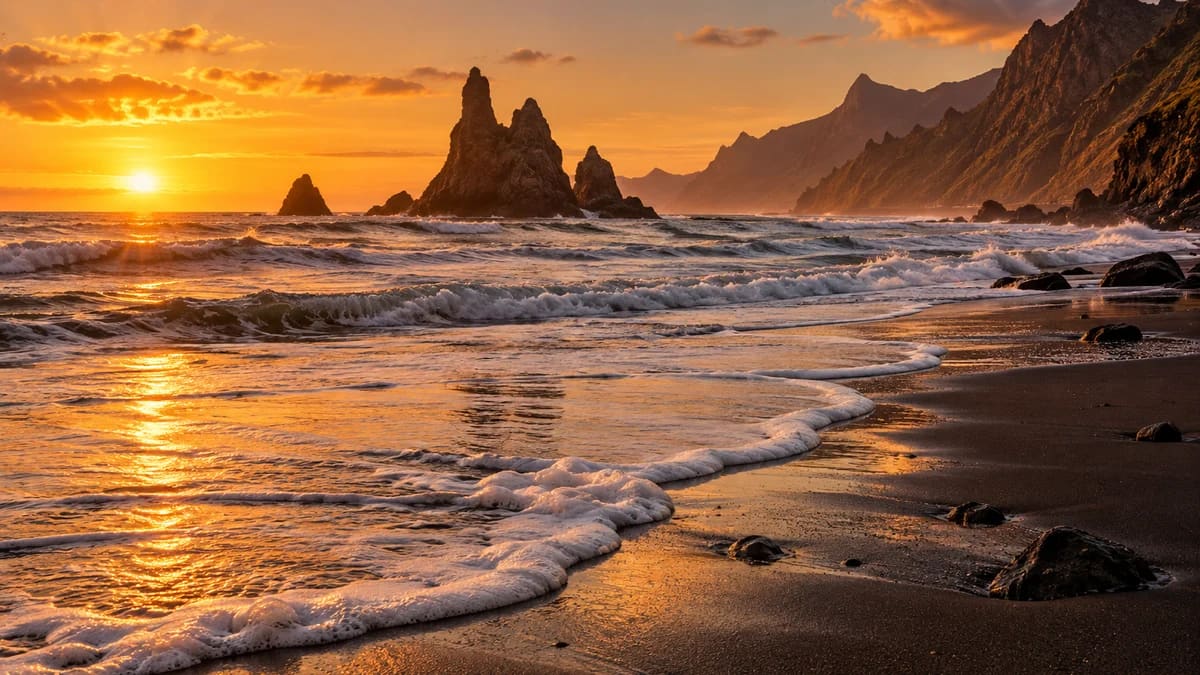
Benijo’s sea stacks and black sand explain why it appears in so many beach selections. However, the municipality confirms closure following rockfalls by the access stairs. The latest local beach-status page still reports closed access at this review.
Treat Benijo as a coastal-view stop, not somewhere to spread a towel. Do not cross fences, descend a closed staircase or follow people around a barrier. Use only permitted public viewpoints, respect roadside restrictions and leave room for residents and buses. A proposed reopening date isn’t evidence that the access has reopened.
Even after any future reopening, this exposed shore would not become a family swimming recommendation. Swell and tides change the available sand and water conditions. I’d pair permitted views with an Anaga outing, keeping an alternative in mind if the road or viewpoint is restricted too.
Playa El Bollullo: a stepped approach and a powerful ocean
Bollullo lies below cliffs in El Rincón, La Orotava. Its black sand and volcanic rocks offer the landscape that resort beaches lack, but the stepped approach complicates visits with a pushchair. Tenerife Tourism notes strong waves and limited parking.
I’d choose it for scenery on a day when access is open, keeping swimming optional. Don’t assume a smooth-looking patch of water is safe: a rip current can look quieter than the breaking waves beside it. Read the signs before descending, follow lifeguard instructions where available, and keep away from the water during rough conditions. Take water and footwear for the return climb; beach services are not a reason to ignore the ocean.
La Arena: black sand with town conveniences
La Arena, in Puerto de Santiago, offers black sand with showers, restaurants and shops nearby. It is easier to combine with ordinary resort plans than a remote northern cove. The official listing confirms its urban facilities. Bring sandals, and keep children back from breaking waves when the shore break is strong.
Playa Jardín: gardens first, bathing notices second
Puerto de la Cruz’s garden-backed black-sand waterfront is worth considering for a promenade walk. For swimming, check current municipal and health notices: bathing restrictions have changed during 2026. I would never turn an old Blue Flag reference or reopening headline into a promise of today’s water quality. Use the Canary Islands beach information map and on-site notices.
Los Guíos: cliffs and a compact beach
Los Guíos gives you black sand beneath the Los Gigantes cliffs, close to the marina. The municipal tourism page describes its facilities. I’d choose it for the setting, accepting limited space and parking. Follow any cordons near cliff faces; shade beneath rock is not automatically a sensible place to sit.
Playa San Juan: a town beach on the west coast
Playa San Juan combines dark sand and pebbles with a harbour and a walkable waterfront. It is my editorial alternative to Abama when town services matter more than a secluded-looking cove. The municipal tourism guide is the place to check facilities. Inspect the bathing area separately from the working harbour.
El Médano, La Tejita and Radazul for active beach days
El Médano: windsurfing and kitesurfing
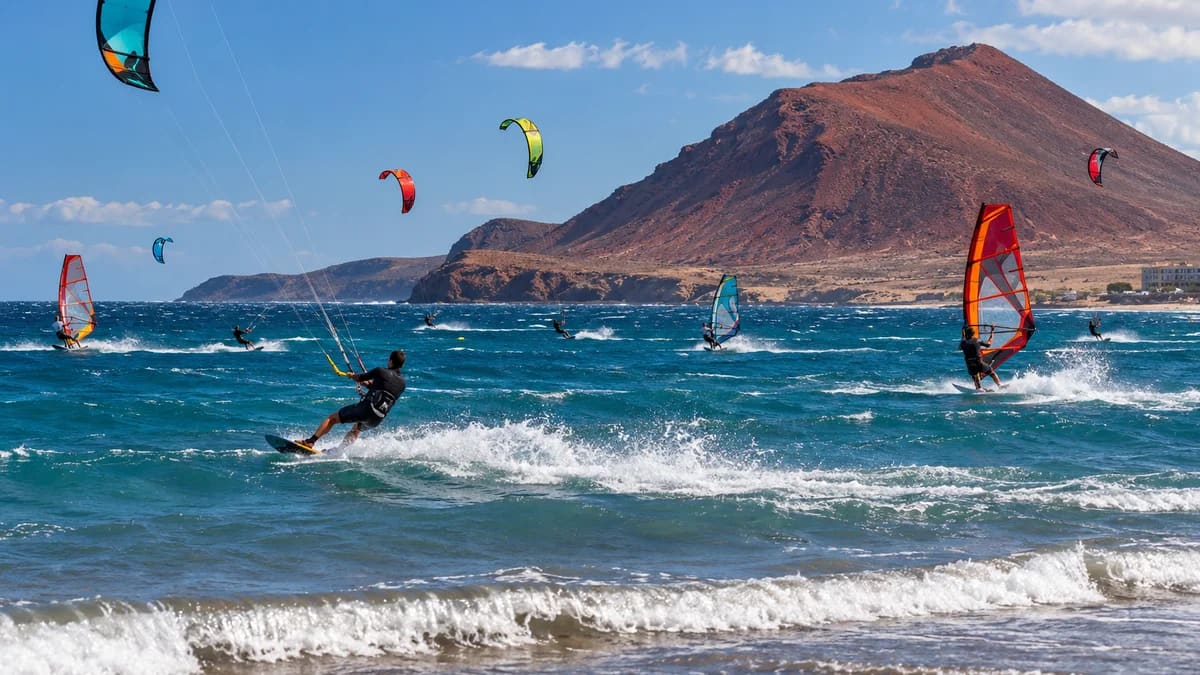
El Médano makes sense when wind is part of the attraction. The tourism board distinguishes the gentler town end from the wind-sports area farther along. Book a lesson with a school that assesses the day’s conditions and your ability, rather than hiring equipment first and deciding how to use it afterwards.
I’d choose it for an active afternoon and a town lunch. For a quiet family swim, compare its wind forecast with a sheltered resort bay. Respect launch zones, give kite lines room and keep away from equipment being rigged on shore. Our Tenerife water sports comparison helps separate wind-driven sports from powered rides and paddle outings.
Playa La Tejita: space beside Montaña Roja
La Tejita is the long, open beach on the other side of Montaña Roja. Its natural sand is darker than the white-sand description sometimes attached to it, and the official guide lists walking access from parking by the road. Naturist use is established here.
Choose it for space and a walk, accepting wind and fewer conveniences on the sand. The mountain doesn’t guarantee shelter across the whole beach. Keep to permitted paths around the protected area; don’t drive towards the shoreline. For children who want easy toilets, shade and a predictable beach setup, I would favour Las Vistas instead.
Radazul: snorkelling with a suitable entry point
Radazul is a useful additional snorkelling option, rather than a sixteenth sand-beach ranking. The official description separates small protected black-sand beaches from a bathing area open to the sea. Depth, rocky entries and boat traffic make the choice of entry point important.
Use a designated swimming area, stay clear of the harbour entrance and choose a guided session if unfamiliar with the coast. Wildlife encounters are never guaranteed. Compare kayaking and snorkelling trips if you want equipment and a guide arranged together.
Practical beach planning: flags, parking and hire costs
Read the flag before unpacking
Green means bathing is permitted; continue supervising children. Yellow means caution: with children or weak swimmers, ask the lifeguard and be prepared to stay out. Red means bathing is prohibited, even if other people enter. Closures and specific hazard notices also apply. Official Canary Islands guidance explains the flags.
A Blue Flag is a separate award, not today’s swimming permission. Nor does the absence of a flag mean an unstaffed beach is safe. At exposed coves, make a conservative decision and keep a dry-land alternative. Don’t plan a swim at Benijo while access remains closed.
Park for the return journey too
Walk from your accommodation for resort beaches where possible. For Las Teresitas, leave more time on weekends; at Bollullo and Anaga, limited spaces make careless roadside parking particularly disruptive. Never block access or stop in a turning area.
For Abama and La Tejita, pack for the walk between car and sand. If someone has reduced mobility, confirm the actual route, adapted toilets and assistance separately. A map’s short distance can conceal stairs. Keep valuables out of sight before arriving, and carry the things you cannot afford to lose.
Check the tariff rather than trusting a universal price
Beach access and optional commercial services are different expenses. Bringing a towel avoids lounger hire; car parks, umbrellas, drinks and hotel-managed services can still cost money. The old €3–€5-per-item estimate is not a verified island-wide tariff and shouldn’t be your budget assumption. Read the current price board, check whether it covers one item or a set, and ask how long the rental lasts.
Jellyfish and changing conditions
There is no reliable jellyfish-free month to promise. Follow marine-life warnings and lifeguard advice, and avoid touching stranded animals. Sun protection, drinking water and footwear belong in your bag even for a short visit. If conditions deteriorate, move the afternoon to a promenade café rather than searching for an unmonitored beach to swim anyway.
Three bookable alternatives to another afternoon on the sand
If you want an organised activity, choose by effort and departure point before headline price. These advertised options were checked on 30 September 2026; confirm the final price, participant rules and cancellation terms before paying. A swim stop depends on conditions.
Puerto Colón jet ski safari
From €60 single / €70 double jet ski
40 minutes from Puerto Colón. A guided ride with a safety briefing, suited to people who want speed rather than a quiet swim. Check driver and passenger ages, equipment, insurance and cancellation terms in the final booking.
Check jet ski availabilityLos Cristianos kayak and snorkel outing
€45 per person advertised
Two hours with Adventures Tenerife towards Palm-Mar. The listing includes a guide, life jacket, boots, snorkel and insurance. Confirm swimming ability and age requirements; wildlife sightings are not guaranteed. Read the linked cancellation policy before booking.
Check kayak availabilityKalima Kat shared catamaran
Adult €50 / child aged 2–12 €40 currently displayed
Three hours from Puerto Colón with catering, drinks and a swimming/snorkelling stop when conditions allow. The €40 headline is not the adult fare. Confirm meeting point, inclusions and cancellation terms with the booking provider.
Check catamaran availabilityFor different vessel sizes, private charters and departure ports, compare our Tenerife boat trips before choosing. A towel at a suitable open beach is a free alternative.
FAQ
Which Tenerife beaches would you choose with children?
Las Vistas, Las Teresitas and the sheltered resort bays are sensible starting points because access and services simplify the day. Check the flag and staffed lifeguard coverage; none is safe in every condition.
Are there white-sand beaches in Tenerife?
There are pale and golden beaches, including Las Teresitas, Las Vistas and Playa del Duque. Much of the island’s natural shoreline is darker. Don’t choose by colour alone: access, wind and water conditions matter more.
Can you swim at Benijo?
Beach access remains reported closed because of rockfall risk at this review. Do not descend. After any official reopening, exposed conditions would still require caution; this guide doesn’t recommend it for family swimming.
Where should I go without a rental car?
Choose a beach near your accommodation: Las Vistas for Los Cristianos, Fañabé for Costa Adeje or El Médano’s town beach locally. That saves travel and parking effort; check current bus routes before a cross-island trip.
Sources and review notes
Source checks use Tenerife Tourism’s beach listings, municipal access and lifeguard information, Canary Islands safety guidance and the three booking pages linked above. Check the official beach map and beach notices again on the day.